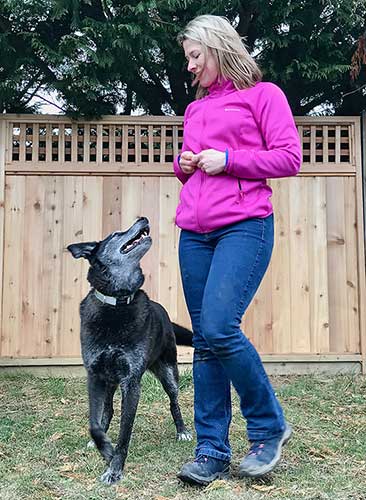

Summer in Vermont brings many wonderful things—longer days, outdoor adventures, community celebrations, and time spent with the people we love. But for many dogs, summer also brings something much less enjoyable: fireworks and thunderstorms.

Fun to watch for us, but many dogs are terrified of the sound of fireworks.
If your dog trembles, pants, hides, barks, paces, clings to you, or seems desperate to escape during loud weather or fireworks season, please know this:
You are not alone, and your dog is not being “bad.”
Many dogs struggle with sudden loud noises. Thunderstorms and fireworks can be overwhelming on several sensory fronts:
- Loud, unpredictable sounds
- Bright flashes
- Changes in atmospheric pressure
- The general tension humans often feel during these events
For some dogs, it’s simply too much.
What Not to Do
One of the biggest mistakes people make is assuming their dog needs to “get used to it.”
If your dog is already fearful, exposing them to a fireworks party or forcing them to endure a storm without support is unlikely to help. In many cases, it can make fear worse.
This is sometimes called flooding—overwhelming the dog with something scary and hoping they adapt. It’s not a humane or effective strategy.
What Helps Right Now
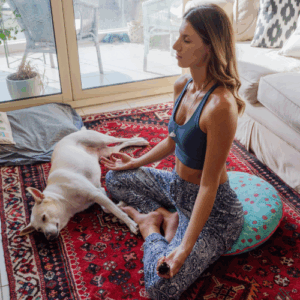
The key to addressing sound sensitivities is to help your dog relax.
1. Create a Safe Space
Before the noise begins:
- Bring your dog indoors early
- Close curtains or blinds
- Choose a quiet interior room, crate, or bedroom
- Make the space cozy and familiar
Never leave a noise-sensitive dog outside during storms or fireworks. Many dogs go missing during these events.
2. Plan for a Good Day
Exercise, enrichment, and training games earlier in the day can help your dog feel more physically and mentally satisfied before the stressful event begins.
Think:
- Sniff walks
- Food puzzles
- Training games
- Gentle play
- Calm companionship
This won’t “fix” fear, but it can help set the stage for a better evening.
3. Reduce the Intensity of the Environment
Simple management can make a big difference:
- White noise, music, or TV
- Fans or air conditioning
- Dim lighting
- Access to cool tile floors if your dog prefers them
4. Offer Comfort (Yes, Really)
There’s an outdated myth that comforting a frightened dog “rewards fear.”
Fear is an emotion, not a behavior.
If your dog seeks you out, it is absolutely appropriate to:
- Sit with them
- Speak calmly
- Offer touch if they enjoy it
- Stay present
Support matters.

Check out our recent Mutts & Manners column on the subject of “enrichment?”
Helpful Extras
Some dogs benefit from tools such as:
- Anxiety wraps (such as Thundershirts)
- Calming accessories
- Long-lasting chews or stuffed food toys (best offered before fear escalates)
These won’t solve every case, but they may help some dogs feel more secure.
The Real Long-Term Solution
Dogs can absolutely learn to feel better about sounds—but it takes time and a thoughtful plan.
The gold standard approach is:
Desensitization + Counterconditioning
This means:
- introducing sounds at a very low, tolerable level
- pairing them with positive experiences
- gradually building confidence over time
This process should move at the dog’s pace.
Talk to Your Veterinarian
Many dogs benefit from veterinary support, especially if the fear is significant.
Your veterinarian may recommend:
- supplements
- medications
- behavior support plans
- referral to a veterinary behaviorist
There is no prize for “toughing it out.”

Just like us, some dogs may need a little extra help to relax.
Be Prepared
Summer storms and fireworks are predictable enough that we can plan ahead.
- Check local event calendars
- Watch the weather forecast
- Prepare your dog’s safe space before the noise starts
Preparation often makes all the difference.
Visit Our Window Display at the Killington Welcome Center
We’ve created a special summer dog safety window display at the Killington Welcome Center featuring tips to help dogs during fireworks and thunderstorm season.
If you’re in the area, stop by and take a look.
Need Help With a Noise-Sensitive Dog?
At Mountainside Mutts, we offer compassionate, science-based coaching to help dogs feel safer and more confident in the real world.
Whether you have a brand-new puppy or an older dog struggling with storms and fireworks, we’d love to help.
Contact us to learn more about private coaching and behavior support.