
 “But why is my dog barking and lunging on leash?”
“He’s great with people and has lots of doggy friends—but put a leash on him and he becomes a whirling dervish!”
We hear this question all the time. And while there may not be one single answer, there are a number of common reasons dogs behave this way. Before diving into them, let’s take a moment to address the stigma around the term “leash reactivity.”
Reactivity ≠ A Broken Dog
So your dog barks, lunges, or growls on leash? You’re not alone. This doesn’t make your dog “bad” or in need of “fixing.” It’s simply behavior—an expression of emotion in a moment. You and your dog can work through this.
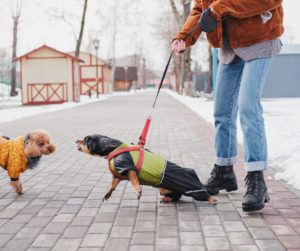
We see leash reactivity across a wide range of dogs. Maybe it’s a fluffy, overexcited 10-pound doodle pulling toward a neighbor, or a 60-pound mixed breed barking intensely at another dog behind an invisible fence. In both cases, the behavior is driven by emotion—often frustration, fear, or overexcitement. Our job is to understand what’s fueling that behavior and help the dog learn new skills to navigate the world more calmly.
Let’s take a closer look at the most common contributing factors:
1. Communication Breakdown
Dogs communicate with their bodies and voices—barking, growling, whining, and body language all play a role. Reactivity is often a dog’s attempt to say, “I’m uncomfortable,” “I’m excited,” or “Please give me space.” If we don’t like what they’re saying—or how they’re saying it—it’s up to us to teach a different, more appropriate way to communicate.
2. Frustration and Barrier Sensitivity
Any form of restraint—a gate, crate, or leash—can create frustration. If your dog has learned that they can usually greet people or play with other dogs freely, being restrained can feel unfair or confusing. This is especially true for adolescent dogs who are still learning emotional regulation.
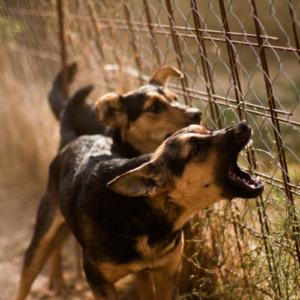
Barriers, like fences and leashes, often lead to frustration and “reactivity”.
Overcoming frustration is a skill. Dogs (like people!) need to learn they can’t always get what they want, and that waiting can be rewarding. A predictable routine and clear boundaries help prevent frustration from spilling over into reactive behavior.
3. Excitement Mismanagement
Not all reactivity stems from fear—some dogs react because they’re too excited. This is where well-meaning but misguided ideas about “socialization” can backfire. Yes, we want our dogs to feel safe and positive about people and other dogs—but that doesn’t mean they need to interact with every one they see.
Proper socialization means learning how to exist in the world—not just how to say hello. It’s okay to advocate for your dog and say, “Not right now, we’re training,” when someone wants to greet them. Let your dog observe and learn from a calm distance.
4. Fear and Negative Associations
Many leash-reactive dogs are simply afraid. Perhaps they’ve had negative experiences with other dogs or people—maybe they were overwhelmed during early “socialization,” or startled by unpredictable children or heavy-handed greetings.
A young dog’s critical socialization window runs from roughly 8 to 16 weeks of age. During this time, positive experiences can shape a confident adult dog—but poor or scary ones can lead to lingering fears. Not all dogs get an ideal start. For them, a slower, gentler approach to new experiences is key. Remember: quality over quantity always.
5. Lack of Relationship
Your dog isn’t a piece of furniture—they’re a living, feeling being who didn’t choose you, but depends on you to meet their needs. If your dog spends more time with other dogs or in daycare than they do training, playing, or learning with you, the leash may be the only connection you share—and it can feel more like a tether than a lifeline.
A strong relationship isn’t built through exercise alone. It comes from shared experiences, trust, and communication. Invest in your bond and your dog will start looking to you for guidance—even in distracting or stressful environments.
6. Lack of Training (and Unhelpful Repetition)
Taking a puppy class is a great start—but learning doesn’t stop there. Training is a lifelong process, and dogs, like people, learn best when taught consistently and kindly.
Repetition matters. If your dog barks and lunges every time they see another dog on leash, they’re rehearsing that behavior—and strengthening it. Change won’t happen unless you change the pattern. That means avoiding triggers when possible, using management tools, and prioritizing calm, structured learning over “seeing what happens.”
You wouldn’t expect to lose weight by joining a gym but continuing to eat junk food. Similarly, you can’t expect behavior to improve if the dog keeps practicing the same unwanted response. Management and training must go hand-in-hand.
Reframing the Problem
Leash reactivity is common. It doesn’t necessarily mean your dog hates other dogs or people. More often than not, it means they’re struggling to process the situation in the moment. Rather than labeling them as “reactive” or “bad,” try to understand what they’re feeling—and what skills they’re missing.
This isn’t a problem to be “fixed” like a broken car. It’s a behavior to be understood and reshaped with patience, training, and consistency. Progress won’t be immediate—but it will happen if you stay the course.
Need help? We’d love to support you.
Our next Reactive Rovers group class starts in August. Sign up here