

Mountainside Mutts Book Club (March) Review:
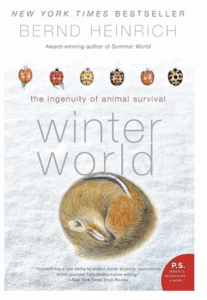
Winter World: The Ingenuity of Animal Survival by Bernd Heinrich
Mountainside Mutts Book Club Review Rating: 🦴🦴🦴
Our little book club has just finished its twentieth book together. That feels like a notable milestone. Even more rewarding was a comment from a returning member (and author) who said, “Thank you for coordinating an impressive book group!” Sometimes you can’t see the wood for the trees, but with our club, the small steps taken over the past few years have quietly grown into something rather special.
This winter has felt particularly long, cold, and dark. Work, skiing, cooking, and of course reading have been the ways I’ve filled the many weeks of short days and long nights. Like many people, I’ve sometimes been so wrapped up in my own concerns that I forget to look outward. Reading Winter World by Bernd Heinrich has been a timely reminder to do exactly that—to look around, get curious, and pay attention to what is (or isn’t!) happening in the natural world around us.
In twenty-five chapters, Heinrich shares the remarkable ways animals survive winter. From hibernating squirrels, chipmunks, and woodchucks to turtles lying torpid beneath frozen ponds, to insects essentially placed into cryonic suspension, the book explores the ingenious strategies that allow life to endure the coldest months.
Living in Vermont makes the seasons feel especially vivid. Summer brings long, warm days and lush green landscapes threaded with streams and rivers. Fall dazzles with color. Even the muddy thaw of early spring carries the promise that warmth is returning. And while I’m an avid skier, winter can still feel long. Outside it is strikingly quiet. Why?
The leaves have fallen and wildlife seems to vanish. But where did everyone go? We know some birds and butterflies migrate and that bears hibernate—but what about all the other animals, birds, insects, and reptiles? How do they survive the bitter cold that many of us struggle through despite our modern comforts?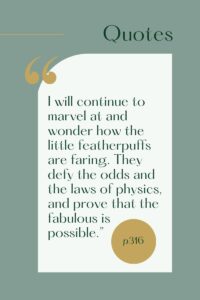
Winter World is essentially a compendium of answers to those questions.
I read the book cover to cover, but our club agreed that might not be the ideal way to approach it. Heinrich packs an extraordinary amount of information into its 300-plus pages. At times the narrative jumps between ideas in a way that can make it hard to follow. Yet this also reflects the author himself—a scientist deeply passionate about the natural world and brimming with knowledge. His academic background occasionally makes the reading dense, but it also reveals a mind overflowing with curiosity. Heinrich reportedly writes much like he speaks, moving from one line of thought to another. There’s something endearing about that kind of enthusiasm.
This is a book best taken slowly. Each chapter answers questions you might never have thought to ask: Where do insects disappear to in winter? How do birds know when to migrate? How can a bear go months without eating—or even going to the bathroom? And those little birds still visiting your feeder in January—where do they spend the coldest nights?
At times, some members of the club questioned whether all of Heinrich’s investigations were necessary. His experiments occasionally involved moving animals between environments, disturbing a beehive in midwinter, or dissecting birds to examine their stomach contents. In humanity’s quest for knowledge, we have certainly done questionable things. I don’t believe Heinrich approaches his work with malice; quite the opposite. He repeatedly emphasizes that conservation succeeds when people are curious and engaged. Throughout the book I couldn’t help but picture the curious boy still alive within the scientist—lifting leaves, turning stones, and reaching into places most of us might hesitate to explore.
So take your time with Winter World. Dip into a chapter here and there. You don’t have to read it sequentially. Wander through it as curiosity strikes.
The book offers remarkable discoveries, but also unanswered questions. Heinrich is particularly fascinated by the golden-crowned kinglet—a tiny bird that somehow survives the brutal winters of northern Maine. Even after years of study, its winter survival still puzzles him. Perhaps it is his personal “why.”
One line especially resonated with me. Heinrich suggests that the kinglet survives through “a species-specific balance created by precisely juggling a set of conflicting benefits and their costs and doing everything just right with little margin for error.”
Reading that felt strangely familiar. It describes, in many ways, how life can feel during difficult seasons. There is no magic. It’s about details—about getting things just right.
Nature adapts in order to survive. We are not so different. To make it through our own darkest winters we must experiment, adjust, and find what works. There may be trial and error along the way, but optimism is essential. Without believing we can adapt, why bother trying?
One of the joys of our book club is finding common threads between our selections. Despite our diverse backgrounds, we share a deep appreciation for the natural world. If you read my previous review, you’ll know we also enjoyed Entangled Life.
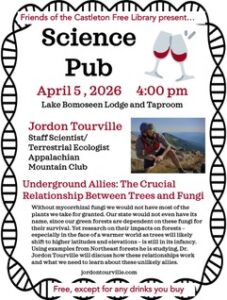
If learning about fungi and mycorrhizal networks intrigues you, one of our members has pointed out an upcoming Science Pub at Bomoseen Taproom & Lodge on April 5th, where Jordan Tourville will discuss the relationship between trees and fungi.
Several of us will be there. If you attend, please come say hello.
This post contains affiliate links. If you click and make a purchase, I may earn a small commission at no extra cost to you.
Next Up:
Do you live in Rutland, Vermont and love books about nature? Our book club meets approximately every 6 weeks. What unites our members is a love for the animals and the natural world around us. Come join us.
Mountainside Mutts Book Club selection (April) is: Never Leave the Dogs Behind: A Memoir by Briana Madia We’ll meet at 6pm on 22 April, 2026 (fittingly on Earth Day). We’d love to have you join the discussion. You can even join via Zoom. Find us on the Book Clubs App or email: als@mountainsidemutts.com for further information.