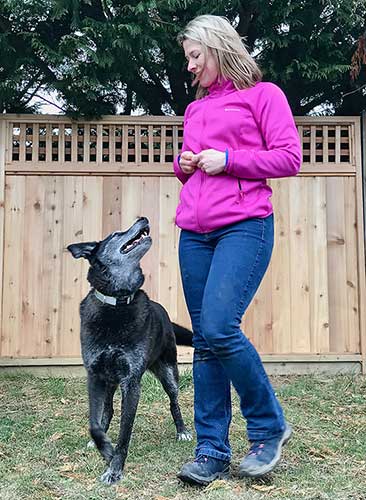

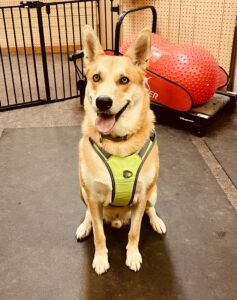
 One of the most common pieces of equipment I see clients struggle with isn’t a leash or a training tool, it’s a poorly fitting harness. Typically the problem is way too much material which is going to make the dog hot and compromise fit. The other main issue is a good looking harness that sets the dog up to pull by attaching the leash to the back. You know, just like a sled dog.
Earlier this year, I wrote a Mutts & Manners column comparing harnesses and choke collars. While there is plenty of good information available, I still regularly meet dogs wearing harnesses that fit poorly, restrict movement, or simply don’t help the owner manage their dog safely. After trying countless options over the years, here are a few harnesses with which I have personal experience.
Easy Walk Harness
If you’re looking for a simple, widely available option, the Easy Walk is often where I start.
The key to fitting this harness is ensuring the chest strap sits well above the shoulders. A harness that hangs low and interferes with leg movement isn’t helping anyone. Properly fitted, the Easy Walk can provide excellent assistance for dogs that pull and can be paired with a martingale collar or head halter for extra control when needed.
This remains one of my go-to recommendations.
Walk Your Dog With Love
Very similar in design to the Easy Walk, this harness is lightweight and simple to use, with only one adjustment point and one buckle.
That simplicity is both its greatest strength and its biggest limitation. While it works well for many smaller dogs, I find it harder to achieve a truly customized fit. For dogs under about 35 pounds, it’s a reasonable option. For larger dogs, I generally prefer the Easy Walk.
2 Hounds Freedom Harness
This has long been one of my favorites.
The Freedom Harness offers both front and back leash attachment points, and the optional two-point leash provides excellent control for larger, stronger dogs. I’ve comfortably walked some very powerful dogs using this setup.
The soft velvet belly strap is comfortable and attractive, although it does collect dirt and isn’t ideal for dogs who love swimming. Some owners find the harness slightly confusing at first, but once you’ve learned how it goes on, it’s straightforward.
One important note: some dogs can learn to back out of this harness. If that’s a concern, I recommend attaching the leash to both the harness and a martingale collar for added security.
Blue-9 Balance Harness
The Balance Harness shines when freedom of movement is your priority.
Unlike many harnesses, it includes buckles around both the neck and body, meaning it doesn’t need to be pulled over your dog’s head. It also offers front and back attachment points and allows excellent shoulder movement.
While it doesn’t provide quite as much anti-pulling assistance as some front-clip designs, it’s one of my favorite options for dogs who already walk reasonably well, for long-line work, hiking, and outdoor adventures.
Lufelux Harness
The Lufelux is similar in style to the Balance Harness and offers many of the same benefits, including front and back attachment points and a convenient handle.
While I prefer the overall build quality of the Balance Harness, the Lufelux can be a solid budget-friendly alternative.
Mighty Paw Sport Harness 2.0
Of the vest-style harnesses I’ve tried, this is probably my favorite.
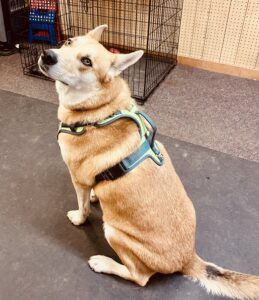
A good model, but not a great fit!
It offers front and back leash attachments, a handle on the back, and—most importantly—is easy to adjust. The buckles operate smoothly, making fitting far less frustrating than with many other vest-style designs.
Phoepet Harness
This is probably my least favorite harness in this post.
While I appreciate the neck buckle and numerous adjustment points, I found it difficult to fit and adjust. Like many bulkier vest-style harnesses, it can also add unnecessary warmth during hot weather and often doesn’t fit as cleanly as lighter harness designs.
What About Tiny Dogs?
With very small dogs, finding a harness that actually fits can be harder than choosing the perfect design.
While I still prefer a front attachment point whenever possible, practicality often wins. For dogs under about 15 pounds, I’m more concerned with finding a secure, comfortable harness than I am with achieving the perfect front-clip setup.
I’ve had some success with the smallest sizes offered by 2 Hounds, but for truly tiny dogs, options become limited quickly. Gooby makes some of the smallest harnesses I’ve encountered, although their step-in  design isn’t my personal favorite. A cat harness, like this one from Pidan, may also be an option.
My Biggest Harness Recommendation
Whatever harness you choose, I strongly recommend selecting one with a leash attachment point on the dog’s chest.
A back-only attachment point may be fine for a dog that already walks beautifully on leash, but for most dogs—especially those over 25 pounds—a front connection offers significantly more control and reduces the dog’s ability to lean into the leash and pull.
The back attachment point can be a useful bonus. I simply wouldn’t make it the only option.
And what about head halters? They can be incredibly helpful for strong dogs and enthusiastic pullers, but they must be introduced carefully and thoughtfully. That’s a topic deserving of its own article.
Some of the products I recommend are available through my curated Amazon storefront. These are items I personally use, trust, or have found helpful in my work with dogs and their people. If you purchase through these links, I may earn a small commission at no additional cost to you. Thank you for supporting Mountainside Mutts and helping me continue to create free educational content.